

 5 Star Service




TL;DR: The best water-saving devices for your home — including WELS-rated showerheads, dual-flush toilets, tap aerators, and smart leak detectors — can cut your quarterly water bill by hundreds of dollars without changing how you live.
With utility prices climbing and the cost of living squeezing household budgets across Queensland, many homeowners are looking for practical ways to cut expenses — fast. One of the most overlooked opportunities sits right inside your walls: your plumbing.
If you have been hit with a hefty quarterly water bill and are wondering what are the best water-saving devices for homes, you are in the right place. The good news? You do not need a full renovation to make a real difference. Strategic, targeted upgrades to your fixtures and fittings can save a typical household hundreds of dollars every year — without sacrificing a drop of comfort.
This guide covers the top water-saving devices available to Gold Coast and Northern NSW homeowners, how they actually work, what they cost, and when you need a licensed plumber to get the job done properly.
Why Invest in Water-Saving Devices?
The case for upgrading your home’s plumbing fixtures is both financial and environmental. Understanding both sides helps you prioritise where to start.
Lowering Your Quarterly Water Bill
The numbers are compelling. The Water Efficiency Labelling and Standards (WELS) scheme estimates that switching to water-efficient products saves an average four-person household approximately $243 per year in reduced utility bills. That figure accounts for both lower water consumption and the reduced energy needed to heat less water.
Consider a realistic scenario: a family of four, each showering for eight minutes a day with an old 15-litre-per-minute showerhead. Replacing it with a 3-star WELS model running at 9 litres per minute saves roughly 70,000 litres of water and around $210 per year on water bills alone — before energy savings are even factored in. Add a leaking toilet that silently wastes up to 750 litres per day, and the potential savings become significant.
The key takeaway: small plumbing upgrades deliver fast, measurable returns on investment.

Environmental Impact on the Gold Coast
We live in one of the driest inhabited continents on Earth. Water scarcity is not a distant concern — it is a present reality for communities right here across Queensland, NSW, and the Gold Coast region. Every litre conserved at home reduces the strain on local reservoirs, delays the need for costly new infrastructure, and protects the ecosystems that depend on healthy waterways.
Home water conservation is not just a personal financial decision. It is a contribution to the long-term resilience of the communities we call home.
Top 5 Water-Saving Devices for Your Home
The plumbing market has advanced considerably. The following five devices represent the best balance of cost, performance, and conservation impact for Gold Coast households.
1. WELS-Rated Low-Flow Showerheads

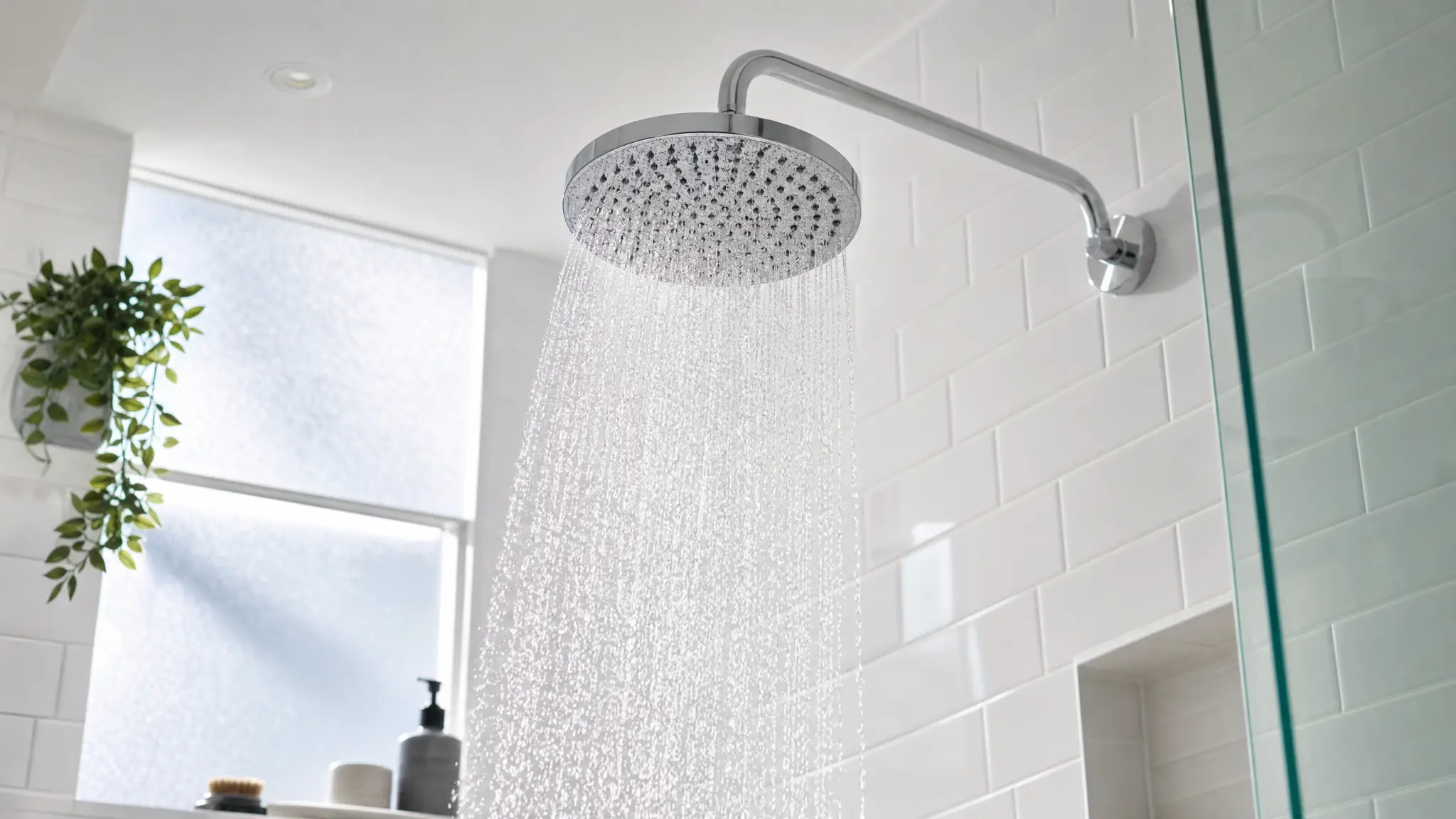
The shower is the single biggest water user in most homes. It is also the easiest place to make a dramatic improvement.
The pressure myth, debunked. The most common objection to low-flow showerheads is the fear of a weak, unsatisfying shower. This concern is outdated. Modern water-efficient showerheads use internal aerators that inject air into the water stream, creating a full, pressurised spray that feels indistinguishable from a standard showerhead — while using a fraction of the water.
| Showerhead Type | Flow Rate | Annual Water Use (Family of 4, 8 min/day) | Annual Saving vs. Standard |
|---|---|---|---|
| Old standard showerhead | 15 L/min | ~175,000 L | — |
| 3-star WELS showerhead | 9 L/min | ~105,000 L | ~70,000 L |
| 5-star WELS showerhead | 6 L/min | ~70,000 L | ~105,000 L |
A 5-star showerhead can save a family of four over 100,000 litres of water per year. That is a significant reduction in both water bills and energy costs, since less water needs to be heated.
Pro tip: Look for showerheads that have passed the mandatory spray force and coverage tests required for 4-star and 5-star WELS products. These are legally required to deliver a comfortable shower experience, so you can upgrade with confidence.
2. Dual-Flush Toilets and Cistern Upgrades

The toilet is the second-largest water user in most homes. If yours was installed before 2000, it is almost certainly wasting water every single day.
- An old single-flush toilet uses 11 to 12 litres per flush.
- A modern dual-flush toilet uses 3 litres for a half-flush and 4.5 to 6 litres for a full flush.
For a household of four flushing an average of four times per person per day, switching to a dual-flush system can save up to 80 litres of water per day — that is over 29,000 litres per year from a single fixture.
What if a full replacement is not in the budget? A cistern conversion kit can retrofit many older toilets to dual-flush operation for a fraction of the cost of a new toilet suite. A licensed plumber can assess whether your existing pan is compatible and carry out the upgrade safely.
3. Tap Aerators and Flow Restrictors
If you want the fastest and cheapest win in home water conservation, tap aerators are it.
These small, inexpensive devices screw directly onto the end of your existing kitchen and bathroom taps. They work by mixing air into the water flow, which reduces the volume of water coming out while maintaining the feel of full pressure. A standard tap can flow at 15 litres per minute; a quality aerator brings this down to as little as 2 to 6 litres per minute.
Consider this: Leaving a tap running while brushing your teeth wastes approximately 5 litres per minute. Over a year, that is around 11,000 litres per person simply running down the drain. An aerator does not change the habit — it just makes the habit far less wasteful.
Most aerators are a straightforward DIY installation. They cost as little as $5 to $20 and require no tools beyond your hands. For a two-bathroom home, you could upgrade every tap in under an hour.
4. Smart Water Leak Detectors

This is the category most homeowners overlook — and it is arguably the most important one.
Hidden plumbing leaks are the leading cause of bill shock. A dripping tap wastes up to 20,000 litres per year. A running toilet can waste 750 litres per day. An underground pipe leak can bleed thousands of litres per week without a single visible sign until your next quarterly bill arrives.
Smart water leak detectors solve this problem by monitoring your home’s water usage in real time.
- Whole-home monitors (such as the Moen Flo or Flume Water) attach to your main water line or meter.
- They track flow patterns 24/7 and use algorithms to distinguish between normal usage and irregular flow that indicates a leak.
- When a problem is detected, you receive an instant alert on your smartphone — day or night.
- Advanced models include an automatic shutoff valve that can cut your home’s water supply remotely, preventing flooding and serious water damage.
A practical scenario: Imagine you are on holiday for two weeks and a pipe fitting fails inside a wall cavity. Without a smart detector, you return home to a flooded laundry and a water bill that reflects two weeks of continuous flow. With a smart detector, you receive an alert within minutes and can shut off the water remotely before any significant damage occurs.
For Gold Coast and Northern NSW homeowners, this technology pairs perfectly with a professional leak detection service. A licensed plumber can use advanced diagnostic equipment to pinpoint the exact location of any hidden leak — no unnecessary excavation required.
5. Rainwater Harvesting and Greywater Systems

For homeowners committed to serious water conservation, capturing and reusing water on-site is the next level.
Rainwater Tanks
A rainwater tank collects run-off from your roof via gutters and downpipes, storing it for later use. In South East Queensland, a typical 5,000-litre tank can supply water for garden irrigation, toilet flushing, washing machine use (with appropriate filtration), and car washing — meaningfully reducing reliance on mains water, particularly during summer when outdoor water use peaks.
Greywater Systems
Greywater systems capture lightly used water from showers, baths, bathroom basins, and washing machines, then filter and redirect it for garden irrigation or toilet flushing. These systems can reduce a home’s mains water consumption by up to 40%.
- Diversion systems: Simpler and cheaper ($1,000–$3,000 installed), these redirect greywater directly to the garden without treatment. Suitable for surface irrigation of non-edible plants.
- Treatment systems: More sophisticated ($8,000–$20,000 installed), these treat greywater to a higher standard, allowing it to be stored and used for toilet flushing and subsurface irrigation.
Important: Greywater system installation in Queensland and NSW must be carried out by a licensed plumber and comply with local council regulations. Always seek professional advice before proceeding.
Understanding the WELS Scheme
Every time you buy a tap, showerhead, toilet, washing machine, or dishwasher, you will see a WELS label. Knowing how to read it takes the guesswork out of choosing water efficient fixtures.

| Label Element | What It Tells You |
|---|---|
| Star Rating (top) | The product’s water efficiency. More stars = more efficient. Ratings run from 0 to 6 stars. |
| Consumption Rate (middle) | The exact amount of water the product uses — litres per minute for taps and showers, litres per flush for toilets. |
| Registration Details (bottom) | The manufacturer’s WELS licence number, confirming the product has been independently tested and registered. |
A practical rule: When comparing two products at a similar price point, always choose the higher star rating. The plumbing products you install today will likely be in use for 10 to 15 years. Choosing a 5-star showerhead over a 3-star model today locks in thousands of litres of savings every year for the life of the fixture.
It is also worth noting that it is illegal to sell WELS-regulated products that are not registered and labelled. If a product does not carry the label, do not buy it.
DIY Installation vs. Hiring a Licensed Plumber
Not every water-saving upgrade requires a professional. But some absolutely do — and getting this wrong can have serious legal and financial consequences.
What homeowners can do themselves:
- Screw on tap aerators and flow restrictors
- Replace a standard showerhead with a new WELS-rated model (provided the flow control device is not removed)
- Install battery-operated point-of-use leak sensors under sinks and behind appliances
When you must call a licensed Gold Coast plumber:
- Installing or replacing a toilet suite or cistern
- Fitting a whole-home smart water shutoff valve
- Repairing hidden underground or in-wall pipe leaks
- Installing a rainwater tank with mains water connection
- Designing and installing a greywater diversion or treatment system
- Investigating and fixing a running or leaking toilet cistern
In Queensland and NSW, plumbing work that goes beyond basic fixture swaps must be carried out by a licensed plumber. Unlicensed plumbing work can void your home and contents insurance, create compliance issues when selling your property, and — most importantly — cause serious water damage if the work fails.
Ready to Cut Your Water Bill?
The team at Oceanside Services has been helping Gold Coast and Northern NSW homeowners upgrade their plumbing for over 25 years. Whether you need a comprehensive plumbing inspection, professional leak detection, or the expert installation of water-efficient fixtures, our fully licensed and insured plumbers are available 24 hours a day, 7 days a week.
Frequently Asked Questions
What device saves the most water at home?
Upgrading to a WELS 4-star or 5-star low-flow showerhead typically delivers the greatest single saving, as showers account for the largest share of indoor water use in most homes. Replacing an old single-flush toilet with a dual-flush system is a close second, particularly in larger households.
Do water-saving showerheads reduce water pressure?
No — not with modern models. Quality water-efficient showerheads use internal aerators to mix air into the water stream, creating a full, pressurised spray that feels comparable to a standard showerhead. WELS 4-star and 5-star products must legally pass spray force and coverage tests before they can be sold here.
Are water-saving devices worth the upfront cost?
Yes, consistently. Tap aerators cost as little as $5 and pay for themselves within days. A new dual-flush toilet suite typically pays for itself within one to two years through reduced water bills. Smart leak detectors can save thousands of dollars by catching a hidden leak before it becomes a flooding event.
How much water does a dripping tap waste?
A single dripping tap can waste up to 20,000 litres of water per year — the equivalent of roughly 133 full bathtubs. A running toilet is even more costly, potentially wasting up to 750 litres per day. Both issues are straightforward for a licensed plumber to fix.
Do I need a licensed plumber to install water-saving devices?
It depends on the job. Basic tasks like fitting a tap aerator or swapping a showerhead are legal DIY projects in Queensland and NSW. However, installing or replacing toilets, fitting greywater systems, connecting rainwater tanks to mains water, and repairing pipe leaks all legally require a licensed plumber. Attempting these without a licence can void your home insurance and create compliance issues.